Agreement Signed in Svalbard Between Murmansk Arctic University, Qingdao University, and Arktikugol Trust
 73
73
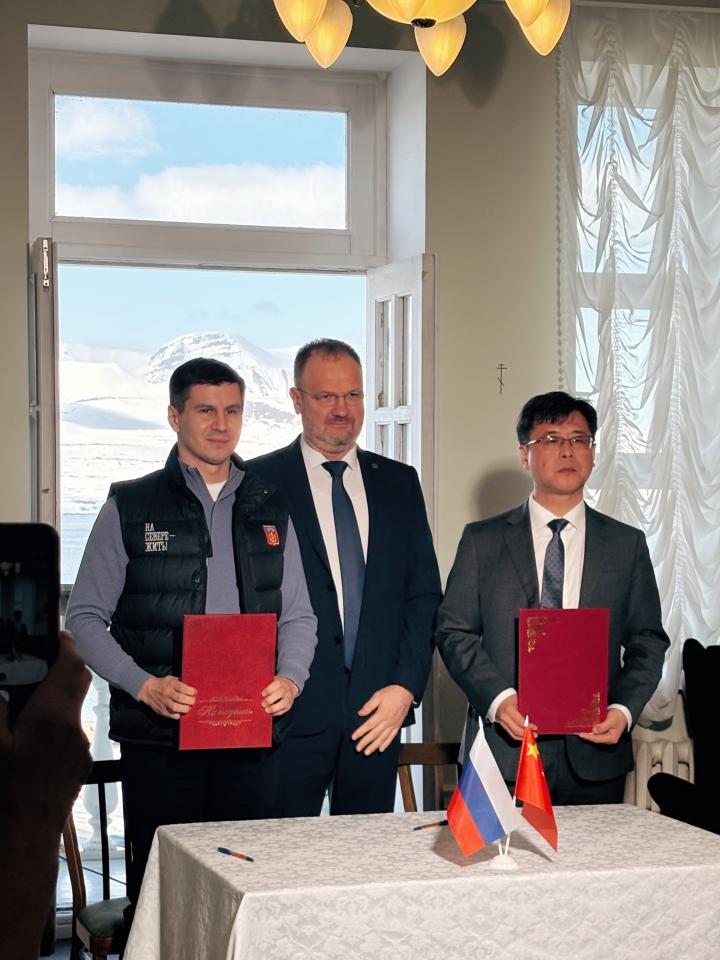
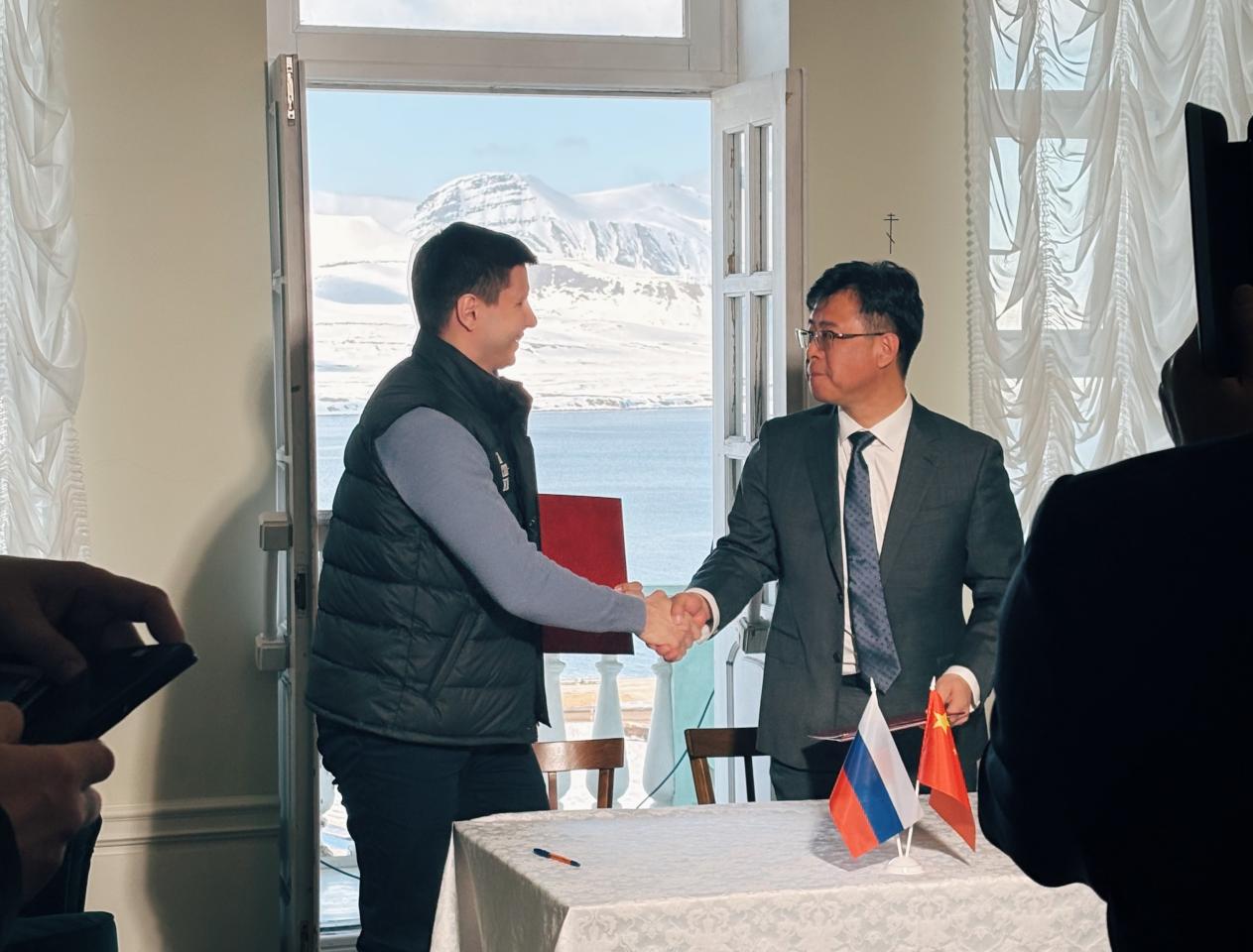
Barentsburg, Svalbard — In accordance with an executive directive from the Government of the Russian Federation to establish an international scientific and educational hub in the Svalbard archipelago, bilateral cooperation agreements have been signed between Murmansk Arctic University (MAU) and Qingdao University (China), as well as between Qingdao University and the Arktikugol Trust.
The agreement on behalf of Murmansk Arctic University was signed by Dmitri Nesterenko, Vice-Rector for Academic Affairs; on behalf of Arktikugol Trust, by Ildar Neverov, Director General; and representing Qingdao University, by Vice-Rector Mr. Niu Haitao. The signing ceremony was attended by Andrei Chemerilo, Consul General of the Russian Federation in Barentsburg.
Together with a previously concluded cooperation agreement between MAU and Arktikugol Trust, these documents establish a trilateral international partnership. Its priority areas include:
· Arctic medicine and human well-being in northern-latitude environments;
· Northern diplomacy, with a focus on engagement with the Norwegian side in Svalbard;
· Mining and mineral resource extraction;
· Construction technologies and materials adapted to extreme northern conditions;
· Environmental science and climate change research.
During their visit to Svalbard, a joint delegation from MAU, Qingdao University, and the Arctic Research Centre of the Yamalo-Nenets Autonomous Okrug (represented by Aleksei Goncharov, First Deputy Director) inspected facilities and premises designated for scientific equipment deployment and the permanent presence of research personnel. University representatives also toured existing laboratories and reviewed ongoing projects under the international scientific and educational centre. Particular attention was given to the feasibility of establishing a carbon monitoring site to track methane emissions from thawing permafrost—a factor with significant implications for global climate dynamics.
«The signed agreements, combined with our assessment of existing research practices and promising sites across the archipelago, underscore the pivotal role of the Murmansk Region and Murmansk Arctic University in strengthening Russia's Arctic presence, advancing cooperation with the People's Republic of China, and promoting Russian science and education,» noted Dmitri Nesterenko, Vice-Rector for Academic Affairs at MAU.
For context, a modern student campus is currently being developed at Murmansk Arctic University, initiated by Andrei Chibis, Governor of the Murmansk Region, and supported by President of the Russian Federation Vladimir Putin. The core objective is to enhance technological infrastructure by 2030 and integrate artificial intelligence studies and applications into academic programmes.